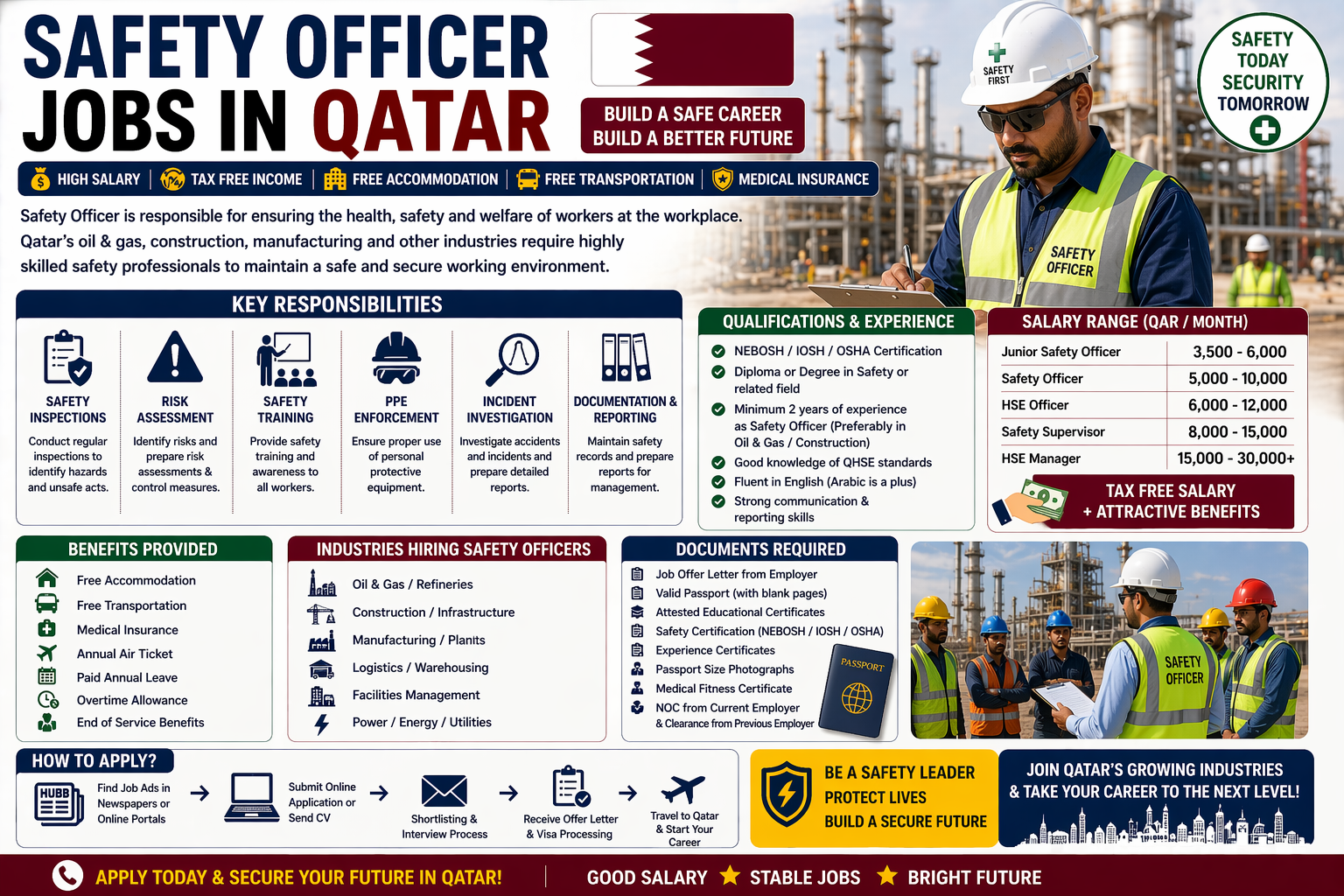
Safety officer jobs in Qatar are in high demand because industries, construction sites, oil refineries, and manufacturing plants must follow strict workplace safety rules. A safety officer is responsible for protecting workers, preventing accidents, and ensuring health and safety standards are followed.
Qatar is one of the richest Gulf countries and has a strong economy driven by oil, gas, construction, and infrastructure projects. These industries employ thousands of workers, increasing the need for professional safety officers.
If you have experience in workplace safety, this can be a high-paying and stable career opportunity in Qatar.
What Does a Safety Officer Do?
A safety officer monitors workplace conditions and ensures all employees follow safety regulations.
Typical responsibilities include:
- Conducting safety inspections
- Identifying workplace hazards
- Preparing risk assessments
- Investigating accidents and incidents
- Providing safety training to workers
- Enforcing use of PPE (Personal Protective Equipment)
- Developing health and safety policies
- Preparing safety reports and documentation
Safety officers are essential in preventing injuries and saving lives.
Industries Hiring Safety Officers in Qatar
Safety officers are needed in many sectors such as:
- Oil and gas companies
- Construction companies
- Manufacturing plants
- Warehouses and logistics companies
- Hospitals and healthcare facilities
- Aviation and transport companies
- Hotels and large commercial buildings
Salary for Safety Officer Jobs in Qatar
The salary depends on qualifications and experience.
Average monthly salaries:
- Junior Safety Officer: QAR 3,500 – QAR 6,000
- Safety Officer: QAR 5,000 – QAR 10,000
- HSE Officer: QAR 6,000 – QAR 12,000
- Safety Supervisor: QAR 8,000 – QAR 15,000
- HSE Manager: QAR 15,000 – QAR 30,000+
Workers may also receive overtime pay and bonuses.
Benefits Provided by Companies
Many companies in Qatar offer:
- Free accommodation
- Free transportation
- Medical insurance
- Annual paid leave
- Return air ticket
- Overtime pay
- End-of-service benefits
Qualifications Required for Safety Officer Jobs
Safety officer jobs require professional certifications and experience.
Common qualifications include:
- NEBOSH certification
- IOSH certification
- OSHA certification
- NVQ Level 4 / Level 6
- Diploma or degree in safety, engineering, or related field
Experience requirements:
- 1–2 years for junior roles
- 3–5 years for experienced roles
- Oil & gas experience for refinery and offshore jobs
Skills Required
Employers usually look for:
- Good communication skills
- Fluent English
- Arabic is a plus
- Risk assessment knowledge
- Accident investigation skills
- Safety audit and inspection knowledge
- Report writing skills
Documents Required for Qatar Safety Officer Jobs
Applicants generally need:
- Valid passport
- Job offer letter
- Updated CV / Resume
- Educational certificates
- Safety certifications (NEBOSH / IOSH / OSHA)
- Experience certificates
- Passport-size photos
- Medical fitness certificate
- Police clearance / NOC if required
How to Apply for Safety Officer Jobs in Qatar
You can apply through several methods.
1. Online Job Portals
Search keywords like:
- Safety officer jobs in Qatar
- HSE jobs in Qatar
- NEBOSH jobs in Qatar
- Construction safety jobs Qatar
2. Company Websites
Oil, gas, and construction companies post vacancies directly.
3. Recruitment Agencies
Licensed recruitment agencies hire for Gulf employers.
4. Newspaper Advertisements
Some companies still advertise in local newspapers.
Why Choose Safety Officer Jobs in Qatar?
These jobs are attractive because of:
- Tax-free salary
- Career growth opportunities
- High demand in multiple industries
- International work experience
- Stable employment
Final Thoughts
Safety officer jobs in Qatar offer excellent salaries and long-term career opportunities for qualified professionals. If you have certifications like NEBOSH, IOSH, or OSHA and relevant experience, you can secure a rewarding job in industries such as construction, oil & gas, and manufacturing.
Before applying, verify the employer or recruitment agency and carefully review your job contract.